Newborns & feeding
Newborn sleep, honestly: what is normal in the first three months
Newborns sleep 14 to 17 hours in stretches of two to four, day and night alike. The first job is safety, the second is patience, and a routine can start around six to eight weeks. Longer nights arrive on their own.
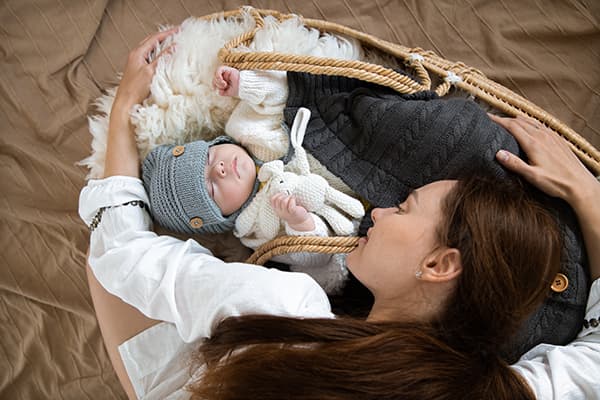
Every new parent asks when the baby will sleep through the night. The honest answer is that a newborn is not built for it, and that most of what is sold as a solution does not change the biology. What follows is what we tell families at the first visits.
What newborn sleep looks like
Fourteen to seventeen hours a day, in pieces. A newborn’s sleep cycle is about 50 minutes, half of it light, and a stomach the size of an egg empties in two to three hours. So they wake, feed and sleep again around the clock. Day and night mean nothing to them yet; the body clock that sorts that out matures over the first six to eight weeks.
Safety first, every sleep
- On the back, on a firm flat surface, in a crib, bassinet or play yard that meets safety standards
- Nothing in the sleep space: no blankets, pillows, bumpers, wedges or toys
- In your room, not your bed, for at least six months
- A pacifier at sleep time once feeding is established
- No smoke in the home, and the room comfortable, not hot
Inclined sleepers, loungers and swings are not for sleep, even supervised naps. If the baby falls asleep in one, move them to the crib.
Helping day and night separate
Daytime: light, noise, talking, faces, feeds every two to three hours even if it means waking a sleepy baby. Night: dim, quiet, boring; feed and change with as little fuss as possible and put the baby straight back down. Most babies sort out days from nights by six to eight weeks with this alone.
Starting a routine
Around six to eight weeks, begin the same short sequence every evening: a feed, a bath or a wipe-down, pajamas, a song or a book, lights out. Ten minutes is enough. Put the baby down drowsy but awake when you can, and do not worry when you cannot. The routine is a signal you are building for later, not a switch.
What to expect by age
- Six to eight weeks: a first longer stretch of four to five hours, usually early in the night
- Three to four months: many babies manage five to six hours; sleep cycles mature and some babies briefly get worse before they get better
- Six months: most babies can sleep eight hours or more without a feed, and this is when formal sleep training, if you want it, is reasonable
Take care of the parents
Sleep in shifts if there are two of you. Accept help with everything except feeding. Sleep when the baby sleeps is easy to say and hard to do, but even one daytime nap changes the night. Tell us if you are so tired you feel unsafe driving, or if your mood is low; those are medical problems we treat, not failures.
For the detail, see our newborn sleep guide, and call with anything that does not fit what you have read here.