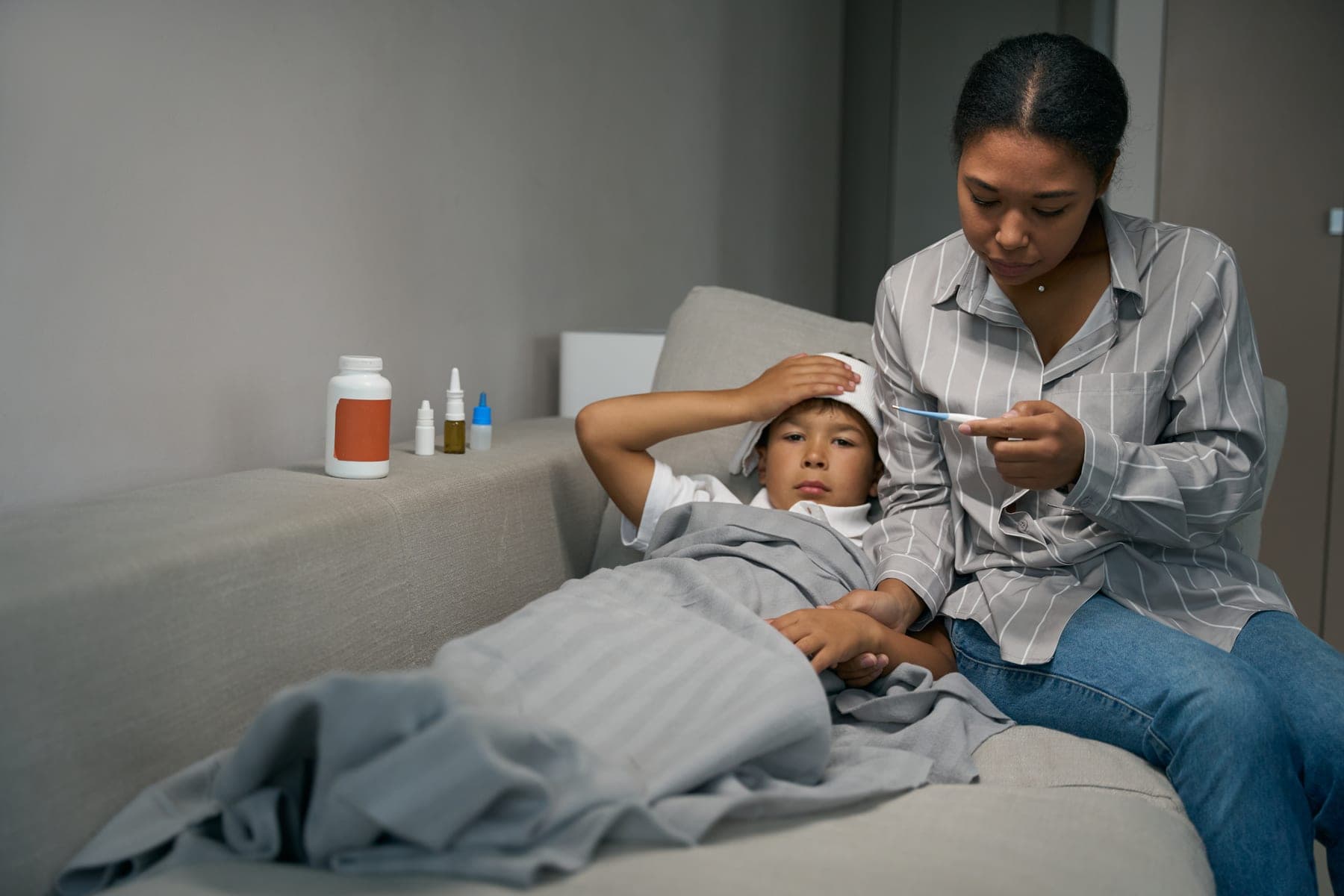
A mother checks her son’s temperature while he rests on the sofa with a cool cloth on his forehead

Sick child

Is your child sick?

If your child is having trouble breathing, is unresponsive, or has a seizure, call 911. For everything else, Dare2Care Pediatrics offers same-day sick visits and telehealth on weekdays, and our parent guides explain what to do at home and when to call.

What to do

  1. 1. Emergency? Call 911

    • Trouble breathing, blue or gray lips
    • Unresponsive, very hard to wake, or a seizure
    • A baby under 2 months with a fever of 100.4°F (38°C) or higher
    • Severe allergic reaction, serious injury, or swallowed something dangerous (Poison Control: 1-800-222-1222)
  2. 2. Call or text us

    Same-day sick visits on weekdays. Tell us what is going on and we will get your child seen or advise you.

    After hours: When the office is closed, call the main number and follow the prompts to reach the on-call provider for urgent concerns. Use the patient portal for anything that can wait until the next business day. In an emergency, call 911.

  3. 3. Telehealth

    Rashes, pink eye, follow-ups and medication questions often work well by video. Established patients can start a visit online.

    Start a telehealth visit (opens in new tab)
  4. 4. What you can do at home

    Our provider-reviewed guides cover the common illnesses, what helps at home, and the signs that mean it is time to come in.

    Browse all parent guides

Common illnesses, explained

  • Infant (2–12 months) · Toddler (1–3 years) · Preschool (3–5 years) · School age (5–12 years)

    Coughs and colds: home care and when it is more than a cold

    Children get 6 to 10 colds a year, each lasting 7 to 14 days with a cough that can linger for three weeks. Fluids, honey (over age 1), saline and a humidifier help; cough medicines do not and are not safe under 6. Watch breathing, not the cough.

    Illness & symptoms, Seasonal

  • Newborn (0–2 months) · Infant (2–12 months) · Toddler (1–3 years) · Preschool (3–5 years) · School age (5–12 years)

    Fever in babies and children: what to do and when to call

    A fever is a temperature of 100.4°F (38°C) or higher. In a baby under 3 months it is an emergency; in older children it is usually the body fighting an infection, and comfort matters more than the number.

    Illness & symptoms

Quick answers

  • Do you offer telehealth visits?

    Yes, for established patients, on weekdays. Rashes, pink eye, medication follow-ups and behavioral health check-ins often work well by video; fevers in babies and breathing problems need to be seen in person.

  • How much acetaminophen or ibuprofen can I give my child?

    Dose by weight, not age, using the AAP dosing tables: acetaminophen every 4–6 hours (no more than 5 doses a day) from 3 months with our okay, ibuprofen every 6–8 hours from 6 months. Never give aspirin. Call us for babies under 3 months.

  • What should I do if my child has a fever at night?

    If your baby is under 3 months, or your child has trouble breathing, a stiff neck, a purple rash or is hard to wake, go to the ER or call 911. Otherwise give fluids and weight-based acetaminophen or ibuprofen, and call us in the morning.

  • When can my child return to school after being sick?

    Once they are fever-free for 24 hours without fever medicine, vomiting and diarrhea have stopped for 24 hours, and they are well enough to take part. A lingering cough alone is not a reason to stay home. Strep needs 12 hours of antibiotics first.